
Most retailers who commission mystery shopping in Ireland receive the same thing back: a PDF with a percentage score, a list of pass/fail observations, and a vague recommendation to “improve the customer greeting.” The report sits in an inbox. The score is discussed once. Nothing on the shopfloor changes. That’s not a mystery shopping problem, it’s a methodology problem. The issue isn’t the shop; it’s what the shop is measuring, and whether the findings are built to be used.
This article explains the four-phase framework I use across every mystery shopping engagement in Ireland and the UK, and why each phase is weighted, scored, and linked directly to the KPIs that matter to your business.
Why most mystery shopping produces scores, not change
A compliance-based mystery shop asks: did the team member do the thing? Did they greet the customer? Did they offer a bag? Tick or cross. The problem is that tick-box observation tells you nothing about how the interaction happened, or what the customer actually felt. A team member can tick every box on a checklist and still leave a customer feeling ignored.
Behaviour-based auditing asks something different: what did the customer experience at each stage of the visit, and what does that tell us about what to train, coach, and measure next? The output isn’t just a score, it’s a map of where each store is today, written in the shopper’s own words, structured so that a manager can walk straight into a development conversation with their team.
“A mystery shop report that ends with a score is a report. One that ends with a conversation is a tool.”
The four-phase framework
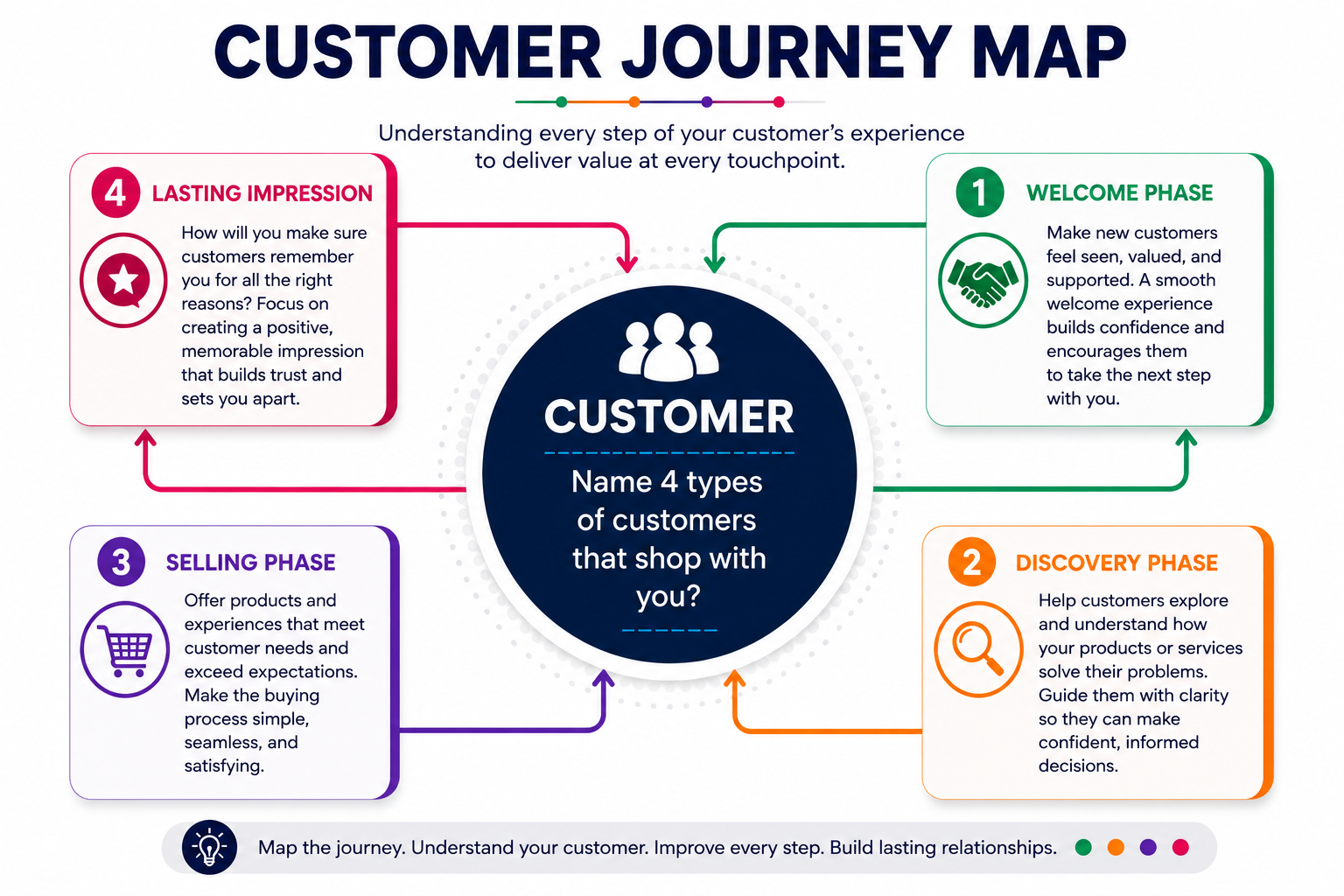
Every mystery shopping audit I conduct in Ireland is structured around four phases that map directly to the retail customer journey. Each phase is scored independently, and each carries a defined weighting that reflects its commercial impact.
Phase 1: The Welcome, weighted at a minimum of 40%
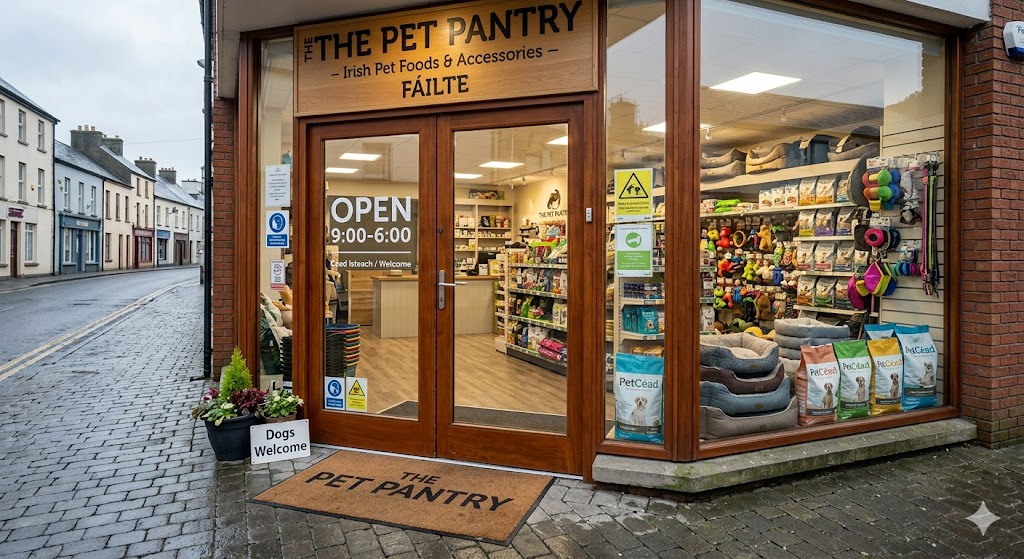
The Welcome is the most heavily weighted phase in the audit, and deliberately so. Research consistently shows that a customer’s decision to stay in a store, and ultimately buy, is made in the first 30 to 60 seconds. How quickly the team acknowledges presence, the quality of that first interaction, and the atmosphere of the store on entry are not soft metrics. They are direct drivers of conversion.
The physical audit at this stage covers the store entrance and layout, visual merchandising at the front of the store, signage clarity, and out-of-stock visibility. But the human element carries the majority of the weight. Auditors assess whether staff are physically present at the front of the store, whether eye contact is made, and whether the greeting is warm and genuine, not a scripted “hello” delivered while looking at a screen.
For stores with low or inconsistent conversion rates relative to footfall, the Welcome phase is almost always where the gap lives. Customers are arriving and leaving without buying. That is a greeting problem before it is a product or price problem.
Phase 2: The Discovery, the conversation that changes the basket
The Discovery phase distinguishes between acknowledgement and engagement. A team member who says “Are you okay there?” or “Just let me know if you need anything” has acknowledged the customer. They have not engaged them. Both of those phrases close the conversation before it begins, and they are scored accordingly.
What the audit looks for instead is a proactive approach triggered by a buying signal: a customer reading the back of a product, searching for a price label, or lingering in a category without moving toward a decision. A trained team member reads these signals and approaches, not to ask if help is needed, but to open a conversation about what the customer is looking for.
The audit scores the quality of the questions asked. Open-ended questions that invite the customer to share context, their lifestyle, their needs, who they’re buying for, are the foundation of a discovery conversation. They are also the direct precursor to a larger basket. Average Transaction Value and Items Per Customer are both driven, at their root, by what happens in this phase.
The framework also distinguishes between new and existing customers. A new customer needs the brand story and product background. An existing customer needs their previous experience validated and built upon. Both require a different conversation, and auditors are trained to assess whether the team member read the situation and responded accordingly.
“Average Transaction Value and Items Per Customer are both driven, at their root, by what happens in the Discovery phase. Not at the till.”
Phase 3: The Selling Phase, where knowledge becomes revenue
By the time a customer reaches the selling phase, the discovery conversation has surfaced what they need. Now the associate’s job shifts: from listening to leading. The framework uses a 70/30 guideline for this phase, the associate should be speaking approximately 70% of the time, sharing product knowledge with genuine enthusiasm, while the customer provides the remaining 30%.
The audit assesses three core competencies here. First, product knowledge: can the team member communicate the specific features and benefits of a product with confidence and without reading from a label? Second, active listening and paraphrasing: does the associate reflect the customer’s stated needs back to them before recommending (“You mentioned you wanted something for sensitive skin, so this one works well because…”)? Third, mirroring: does the associate’s body language and energy match the customer’s, building the rapport that makes a recommendation feel like advice rather than a sell?
Strategic suggestion, introducing complementary items that support the primary purchase, is also assessed here. This is the difference between a customer leaving with one item and leaving with three. It is not upselling in the pushy sense; it is a natural extension of the discovery conversation, and it requires the associate to have genuinely listened.
Phase 4: The Goodbye, the moment that decides whether they come back
The final phase is the one most retailers underinvest in. The transaction is done; the impulse is to move on to the next customer. But the Goodbye shapes whether this customer returns, recommends the store, and leaves a review, and those three things have a direct bearing on long-term revenue.
The audit at this stage looks for four behaviours. Reaffirmation: does the team member validate the purchase (“That colour really suits you” or “You’ll find it lasts longer than the one you had before”)? This reduces buyer’s remorse and builds confidence in the decision. The final check: does the associate ask whether the customer found everything they were looking for today? Loyalty: is the customer signed up to the brand’s loyalty programme where one exists? Departure: is the farewell warm, with maintained eye contact, and a genuine invitation to return?
A customer who leaves on a high note is not just a satisfied customer, they are a future visitor and a potential referral. The Goodbye is the cheapest marketing the store will ever do.
How the phases connect to your KPIs
One of the most common frustrations retail leaders share with me is that their trading data and their mystery shop data exist in separate conversations. The numbers say conversion is down; the mystery shop says the team is “friendly.” Neither informs the other. The four-phase framework is built to close that gap.
| Phase | What it measures | KPI it drives |
|---|---|---|
| The Welcome | First impressions, layout, greeting quality | Conversion rate |
| The Discovery | Buying signals, open-ended questioning, customer profiling | ATV & Items Per Customer |
| The Selling Phase | Product knowledge, active listening, strategic suggestion | Average Transaction Value |
| The Goodbye | Reaffirmation, loyalty sign-up, departure impression | Return visits & referrals |
When a store’s conversion rate is low, the audit points to the Welcome. When ATV is flat despite good footfall, the Discovery and Selling phases tell you where the conversation is breaking down. When customer retention is poor, the Goodbye needs attention. The framework makes it possible to look at a KPI problem and identify, within the audit data, exactly which behaviours are driving it.
What happens after the shop
The audit itself is only the first half of the process. The findings are written in the shopper’s own words, not a compliance summary, but a narrative of the customer experience as it actually felt. Each report is structured so it can be walked into a 1:1 coaching conversation with the team member involved, framed developmentally rather than punitively.
Every mystery shopping engagement I run in Ireland includes a re-shop: a follow-up visit after the training and coaching work, using the same framework and the same scoring criteria, so that the change is measured in behaviour, not in self-report or gut feel. The difference between a 65% score and a 90% score is not a number. It is a team that has shifted how they show up for customers, every day, consistently. That is what twelve months looked like with Reens Life Pharmacy in Cork.
Is mystery shopping right for your stores?
Mystery shopping in Ireland works best when the findings are going to be used, when there is a manager or leadership team ready to have the development conversations the audit creates, and a business willing to invest in the training or coaching that the gaps point toward. It is not a gotcha tool. It is a baseline, and baselines only matter when you intend to move from them.
If you want to understand what’s actually happening in your stores, not what your team reports back, and not what the footfall data implies, a mystery shopping audit is the clearest way to find out. A thirty-minute conversation is usually enough to establish whether it’s the right next step.